The Science of Strength Training: How Muscles Really Grow

The Science of Strength Training: How Muscles Really Grow
Building muscle isn't just about lifting heavy weights and hoping for the best. Understanding how muscle growth actually works can transform your training results and help you avoid common mistakes that keep people stuck at plateaus.
This guide breaks down the science behind muscle growth for anyone serious about strength training - from beginners who want to understand what's happening in their body to experienced lifters looking to optimize their approach.
We'll explore how muscle hypertrophy works at the cellular level, diving into the biological processes that turn your training sessions into actual muscle tissue. You'll also discover why progressive overload principles form the foundation of every successful strength program, and how the right approach can maximize your gains.
Finally, we'll cover the often-overlooked factors that make or break your progress: nutrition for muscle building and how recovery for muscle growth plays a bigger role than most people realize. Your muscles don't grow in the gym - they grow when you're resting, eating, and sleeping.
Understanding Muscle Anatomy and Fiber Types
Fast-Twitch vs Slow-Twitch Muscle

Fibers and Their Growth Potential
Your muscles aren't all built the same way. Think of muscle fibers like different types of athletes - some are marathon runners, others are sprinters. Slow-twitch fibers (Type I) are your endurance specialists, packed with mitochondria and designed for sustained activity. They're smaller, don't generate as much force, but can keep going for hours without getting tired.
Fast-twitch fibers come in two main varieties: Type IIa and Type IIx. Type IIa fibers are the hybrid athletes - they can produce significant force while still having decent endurance capacity. Type IIx fibers are your pure power generators, capable of explosive contractions but they tire quickly.
When it comes to muscle growth potential, fast-twitch fibers win by a landslide. They can increase in size by up to 50% or more with proper strength training, while slow-twitch fibers typically see more modest gains of around 25-30%. This explains why powerlifters and bodybuilders focus heavily on explosive, heavy lifting - they're specifically targeting these high-growth-potential fibers.
Your genetic fiber type distribution plays a huge role in your training response. People with more fast-twitch fibers naturally excel at building muscle mass and strength, while those with predominantly slow-twitch fibers might find endurance activities more rewarding. However, hypertrophy training can shift some Type IIx fibers toward the Type IIa category, improving both size and endurance capacity.
The Role of Satellite Cells in Muscle Development
Satellite cells are the unsung heroes of muscle growth. Picture them as your muscle's construction crew, sitting quietly along muscle fibers until they're needed for repairs and expansion. These specialized stem cells remain dormant until mechanical stress or muscle damage triggers their activation.
When you lift weights and create microscopic tears in your muscle fibers, satellite cells spring into action. They multiply rapidly and donate their nuclei to existing muscle fibers. This nuclear donation is crucial because muscle fibers are massive cells that need multiple control centers (nuclei) to manage their size and protein production effectively.
The satellite cell response varies significantly between individuals and training methods. High-intensity resistance training activates more satellite cells compared to moderate loads. Eccentric movements (the lowering portion of lifts) create more muscle damage and subsequently trigger greater satellite cell activity.
Age affects satellite cell function dramatically. Younger individuals have more satellite cells and they respond more aggressively to training stimuli. After age 30, satellite cell numbers gradually decline, which partially explains why building muscle becomes more challenging as we get older.
Nutrition timing matters for satellite cell activation. Consuming protein and carbohydrates within the post-workout window provides the raw materials these cells need for optimal function. Without adequate nutrition, satellite cells can't effectively contribute to the muscle-building process.
How Muscle Protein Structure Impacts Strength Gains
Muscle proteins work like a sophisticated machine with multiple moving parts. The primary players are actin and myosin - thin and thick filaments that slide past each other to create contractions. The more of these protein filaments you have, and the better they're organized, the stronger your muscles become.
Protein synthesis is where the magic happens for strength training adaptations. Your muscles constantly break down and rebuild proteins, but resistance training tips this balance toward increased synthesis. The key proteins for strength aren't just actin and myosin - structural proteins like titin and support proteins like dystrophin also play critical roles in force transmission.
Different training loads stimulate different protein adaptations. Heavy loads (85-100% of your max) primarily enhance the neural coordination between protein filaments, improving force output without necessarily increasing muscle size dramatically. Moderate loads (65-80%) create a better balance between size increases and strength gains by promoting both contractile protein synthesis and overall muscle fiber growth.
The quality of protein synthesis matters as much as quantity. Your muscles need all essential amino acids available simultaneously to build complete, functional proteins. Missing even one essential amino acid can limit the entire protein-building process, regardless of how hard you train.
Training frequency influences protein turnover rates. Muscles remain in an elevated protein synthesis state for 24-48 hours after training. This window explains why training each muscle group 2-3 times per week often produces better results than once-weekly sessions - you're maintaining a more consistent anabolic environment.
The Biological Process of Muscle Hypertrophy
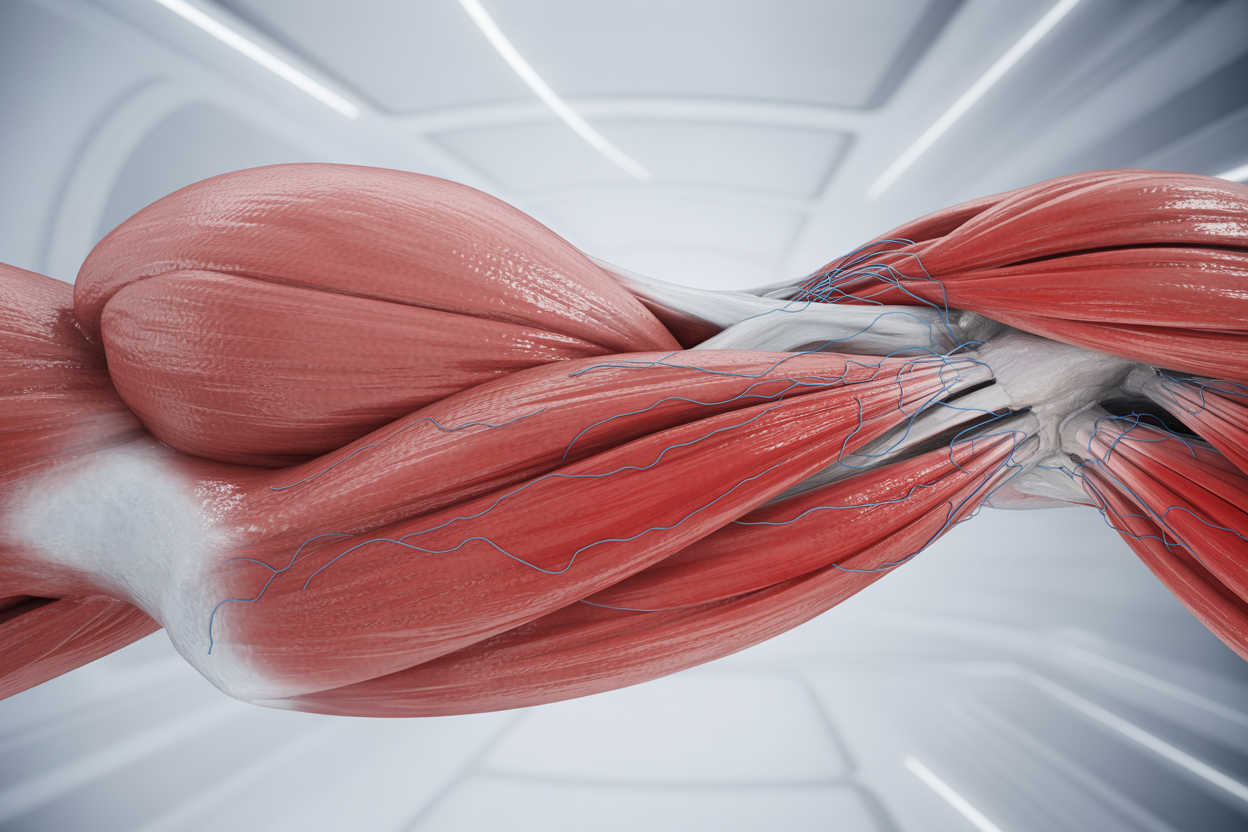
Mechanical Tension as the Primary Growth Driver
When you lift weights, your muscles experience mechanical tension – the force generated when muscle fibers contract against resistance. This tension serves as the most important signal for muscle growth, essentially telling your body "we need to get stronger to handle this workload."
Research shows that mechanical tension activates a complex cascade of cellular events. When muscle fibers stretch and contract under load, mechanically sensitive proteins within the muscle detect this stress. These proteins, called mechanosensors, trigger pathways like mTOR (mechanistic target of rapamycin), which acts like a master switch for muscle protein synthesis.
The key lies in progressive loading. Your muscles adapt to whatever stress you regularly place on them, so consistently challenging them with heavier weights or more demanding exercises creates the ongoing tension needed for hypertrophy training success. This explains why simply going through the motions with light weights won't produce significant muscle growth – your muscles need to work hard enough to generate meaningful mechanical tension.
Time under tension also plays a role. Controlling the eccentric (lowering) portion of a lift creates additional mechanical stress on muscle fibers, potentially enhancing the growth stimulus. Studies suggest that muscles experience greater mechanical tension during eccentric contractions, making controlled negatives a valuable tool for maximizing growth.
Metabolic Stress and Its Impact on Muscle Size
Metabolic stress occurs when your muscles work hard enough to accumulate metabolic byproducts like lactate, hydrogen ions, and inorganic phosphate. That burning sensation you feel during high-rep sets? That's metabolic stress in action, and it contributes significantly to muscle growth through several mechanisms.
When metabolic stress builds up, it triggers the release of growth-promoting hormones and creates an environment that favors muscle protein synthesis. The accumulation of metabolites causes muscle cells to swell, which may activate stretch-sensitive pathways that promote growth. This cellular swelling also appears to reduce protein breakdown while simultaneously increasing protein synthesis.
Higher repetition ranges (8-15+ reps) with moderate loads typically generate more metabolic stress than heavy, low-rep training. Techniques like drop sets, supersets, and rest-pause training maximize metabolic accumulation by keeping muscles under constant work with minimal recovery time.
Blood flow restriction training takes metabolic stress to another level. By partially restricting blood flow to working muscles, you can achieve significant metabolic stress with relatively light weights. This approach allows for muscle growth stimulus even when heavy loading isn't possible due to injury or equipment limitations.
Muscle Damage and the Recovery-Growth Cycle
Muscle damage refers to microscopic tears in muscle fibers that occur during intense training. While this might sound concerning, controlled muscle damage actually serves as an important stimulus for muscle growth when properly managed through recovery protocols.
When muscle fibers experience damage, your body initiates a repair process that involves satellite cells – specialized cells that fuse with existing muscle fibers to help repair and grow them. This repair process doesn't just restore the muscle to its previous state; it often results in the muscle becoming slightly larger and stronger than before, a phenomenon called supercompensation.
The type of exercise matters for muscle damage. Eccentric contractions (lengthening under load) typically cause more muscle damage than concentric contractions. This explains why the lowering portion of exercises often creates more soreness and why eccentric-focused training can be particularly effective for hypertrophy training.
However, excessive muscle damage can actually hinder muscle growth by overwhelming your recovery capacity. The goal is to create enough damage to stimulate adaptation without exceeding your ability to recover. This balance requires careful attention to training volume, intensity, and recovery practices.
Protein Synthesis vs Protein Breakdown Balance
Your muscles exist in a constant state of turnover, with protein synthesis (building) and protein breakdown (destruction) happening simultaneously. Muscle growth occurs when protein synthesis exceeds protein breakdown, creating what scientists call a positive net protein balance.
Strength training dramatically increases muscle protein synthesis rates for 24-48 hours after your workout. This elevated synthesis rate represents your muscles' attempt to repair damage and adapt to the training stimulus. The magnitude and duration of this response depend on factors like training intensity, volume, and your training experience.
Protein breakdown also increases after training, but typically not to the same degree as protein synthesis. The key to maximizing muscle growth lies in optimizing this ratio – maximizing synthesis while minimizing excessive breakdown. Proper nutrition for muscle building, particularly adequate protein intake, plays a crucial role in maintaining this favorable balance.
Timing matters too. Consuming protein within a few hours of training helps maintain elevated protein synthesis rates and provides the raw materials your muscles need for growth. Research suggests that spreading protein intake throughout the day, rather than consuming it all at once, better supports sustained muscle protein synthesis.
Recovery for muscle growth becomes critical because protein synthesis rates remain elevated for up to 48 hours post-workout. Poor sleep, inadequate nutrition, or excessive stress can all negatively impact this process, highlighting why recovery deserves as much attention as the training itself.
Progressive Overload Principles That Maximize Growth

Why Your Muscles Need Increasing Challenges to Grow
Your muscles are remarkably adaptive machines. When you first start strength training, your body responds quickly to the new stimulus – but this honeymoon phase doesn't last forever. The principle behind muscle growth is simple: your muscles will only grow when they're forced to work harder than they're used to.
Think of it like learning a new skill. When you first picked up a guitar, even playing a simple chord was challenging. But after weeks of practice, that same chord became effortless. Your muscles work the same way – they adapt to whatever stress you place on them, becoming stronger and more efficient at handling that specific load.
This adaptation process is why you can't just do the same workout with the same weights forever and expect continued muscle growth. Your muscles become comfortable with the routine, and growth plateaus. Progressive overload solves this by systematically increasing the demands placed on your muscles over time.
The beauty of progressive overload lies in its flexibility. You can increase the challenge by adding more weight, performing more repetitions, adding extra sets, or even changing the tempo of your movements. Research shows that muscles respond to stress by activating satellite cells, which donate their nuclei to existing muscle fibers, allowing them to grow larger and stronger.
Volume, Intensity, and Frequency Optimization Strategies
Maximizing muscle growth requires balancing three critical training variables: volume, intensity, and frequency. Getting this balance right can make the difference between steady progress and frustrating plateaus.
Volume represents the total amount of work you perform – typically measured as sets × reps × weight. Studies consistently show that higher training volumes generally lead to greater hypertrophy training results, up to a point. Most research suggests that 10-20 sets per muscle group per week provides optimal muscle growth for most people.
| Training Level | Weekly Volume (sets per muscle group) | Example Split |
|---|---|---|
| Beginner | 8-12 sets | Full body 3x/week |
| Intermediate | 12-16 sets | Upper/Lower 4x/week |
| Advanced | 16-20+ sets | Push/Pull/Legs 6x/week |
Intensity refers to how much weight you're lifting relative to your maximum capability. For strength training focused on hypertrophy, working in the 65-85% of your one-rep max range proves most effective. This typically translates to rep ranges of 6-15 repetitions per set.
Frequency determines how often you train each muscle group per week. Research indicates that training each muscle group 2-3 times per week produces superior muscle growth compared to once-weekly training. This allows you to distribute your weekly volume across multiple sessions, maintaining higher quality repetitions.
The key is finding your sweet spot. Start with moderate volume and frequency, then gradually increase based on your recovery capacity and progress. Your muscles need enough stimulus to grow but also enough recovery time to actually build new tissue.
Time Under Tension for Enhanced Muscle Development
Time under tension (TUT) refers to how long your muscles remain under stress during each set. This often-overlooked variable can significantly impact your muscle growth results when applied correctly.
The magic happens when you control the tempo of your lifts rather than rushing through repetitions. A typical rep might take 2-4 seconds total, but strategically extending this to 6-8 seconds can enhance the muscle-building stimulus. The eccentric (lowering) phase deserves special attention – this is where your muscles are strongest and can handle the most tension.
Research shows that extending the eccentric phase to 3-5 seconds while maintaining a 1-2 second concentric (lifting) phase creates optimal conditions for hypertrophy. This approach maximizes mechanical tension, one of the primary drivers of muscle growth.
Different TUT strategies work for different goals:
-
Standard tempo (2-1-2-1): 2 seconds down, 1 second pause, 2 seconds up, 1 second pause
-
Eccentric emphasis (4-1-2-1): Slower lowering phase for increased muscle damage
-
Pause reps (2-3-2-1): Extended pause at the bottom to eliminate momentum
Don't obsess over counting every second, but being mindful of your lifting tempo can unlock new levels of muscle growth. Focus on controlled movements that challenge your muscles throughout the entire range of motion. This approach not only builds muscle more effectively but also improves your mind-muscle connection and reduces injury risk.
Remember that slower doesn't always mean better. Extremely slow movements can actually reduce the total volume you can perform, potentially limiting overall muscle growth. Find the tempo that allows you to maintain good form while maximizing the challenge to your muscles.
Nutritional Requirements for Optimal Muscle Growth

Protein Timing and Quality for Maximum Synthesis
Your muscles need protein to grow, but not all proteins are created equal. Complete proteins containing all nine essential amino acids deliver the best results for muscle growth. Whey protein stands out as the gold standard because your body absorbs it quickly and it's packed with leucine, the amino acid that kickstarts muscle protein synthesis.
The old idea of constantly eating every two hours has been largely debunked. What matters more is hitting your daily protein target - aim for 0.8 to 1.2 grams per pound of body weight. Spreading this across 3-4 meals works just fine, with each meal containing 25-35 grams of protein to maximize synthesis.
Post-workout protein timing gets a lot of attention, and for good reason. Your muscles remain primed for protein uptake for several hours after training. Getting 20-40 grams of high-quality protein within a few hours of your workout helps maximize this window, though it's less critical than once believed.
Plant-based proteins can absolutely support muscle growth when combined properly. Mixing rice and pea protein, or pairing beans with grains, creates complete amino acid profiles that rival animal proteins.
Carbohydrates as Fuel for Intense Training Sessions
Carbs aren't the enemy of muscle growth - they're actually your training partner. When you lift heavy weights or push through intense hypertrophy training, your muscles rely primarily on glycogen (stored carbs) for fuel. Without adequate carbs, your performance drops and recovery suffers.
Pre-workout carbs matter most when you're training hard. Eating 30-50 grams of easily digestible carbs 1-2 hours before training gives your muscles the fuel they need. Bananas, oatmeal, or white rice work well here.
Post-workout carbs help replenish glycogen stores and create an anabolic environment. They also spike insulin, which helps shuttle amino acids into muscle cells. Aim for 0.5-1 gram per pound of body weight within a few hours after training.
The timing becomes less critical on rest days, but don't eliminate carbs entirely. Complex carbs like sweet potatoes, quinoa, and whole grains provide steady energy and support recovery processes throughout the day.
Essential Fats That Support Hormone Production
Fat plays a crucial role in muscle growth that goes way beyond just providing calories. Your body needs dietary fat to produce testosterone, growth hormone, and other anabolic hormones that directly impact muscle development.
Monounsaturated fats from sources like olive oil, avocados, and nuts support healthy testosterone levels. Research shows that men who consume adequate amounts of these fats maintain higher testosterone compared to those on very low-fat diets.
Omega-3 fatty acids from fish, walnuts, and flax seeds fight inflammation and may improve muscle protein synthesis. These fats also support recovery by reducing exercise-induced muscle damage.
Saturated fats, despite their bad reputation, also play a role in hormone production. About 30% of your fat intake can come from saturated sources like grass-fed beef, eggs, and coconut oil without negative health effects.
Aim for 0.3-0.5 grams of fat per pound of body weight daily, focusing on whole food sources rather than processed oils when possible.
Hydration's Critical Role in Muscle Function and Growth
Water makes up about 76% of muscle tissue, making hydration absolutely critical for muscle growth and function. Even mild dehydration can significantly impact your training performance and recovery.
Proper hydration helps transport nutrients to muscle cells and removes metabolic waste products. When you're dehydrated, this process slows down, hampering both performance and recovery.
During training, aim to drink 16-24 ounces of water per hour of exercise, adjusting based on sweat rate and environmental conditions. Clear or light yellow urine indicates good hydration status.
Electrolytes become important during longer training sessions or in hot conditions. Sodium, potassium, and magnesium help maintain fluid balance and support muscle contractions. Natural sources like coconut water or adding a pinch of sea salt to your water bottle work well.
Don't rely on thirst alone - by the time you feel thirsty, you're already mildly dehydrated. Sip water consistently throughout the day, aiming for at least half your body weight in ounces daily.
Recovery and Sleep's Impact on Muscle Development

Growth Hormone Release During Deep Sleep Phases
Your muscles don't just grow in the gym – they transform while you sleep. During deep sleep phases, particularly the first few hours of rest, your pituitary gland releases growth hormone in powerful pulses. This natural anabolic agent reaches peak concentrations around midnight to 2 AM, making quality sleep timing crucial for muscle growth.
Growth hormone works like a master conductor, orchestrating protein synthesis and directing amino acids to muscle tissue. When you consistently get 7-9 hours of quality sleep, you're essentially providing your body with optimal windows for this hormonal cascade. Poor sleep patterns disrupt this release, cutting growth hormone production by up to 70% – a devastating blow to your strength training progress.
The relationship between sleep depth and hormone release explains why those who prioritize sleep see better results from identical training programs. Your deepest sleep stages, known as slow-wave sleep, coincide with the highest growth hormone surges, making every minute of quality rest count toward your muscle-building goals.
Muscle Repair Processes That Occur During Rest
Rest periods between workouts aren't downtime – they're when the real magic happens. During recovery, your muscles undergo complex repair processes that actually make them stronger and larger than before. This phenomenon, called supercompensation, relies on adequate rest to function properly.
When you strength train, you create microscopic tears in muscle fibers. During rest, satellite cells activate and begin fusing with damaged muscle fibers, donating their nuclei to support protein synthesis. This process can take 48-72 hours for larger muscle groups, explaining why experienced lifters avoid training the same muscles on consecutive days.
Blood flow increases to recovering muscles during rest, delivering essential nutrients and removing metabolic waste products. This enhanced circulation carries oxygen, amino acids, and growth factors directly to the tissue that needs repair. Without proper rest intervals, this cleanup and rebuilding process gets interrupted, leading to accumulated damage rather than progressive strength gains.
The muscle repair timeline follows predictable patterns. Immediate post-workout inflammation peaks within 24 hours, followed by the rebuilding phase that can extend up to 96 hours for intense training sessions. Understanding this timeline helps optimize training splits and prevents the common mistake of returning to the gym too soon.
Active Recovery Methods That Enhance Growth
Active recovery bridges the gap between complete rest and intense training, promoting blood flow without adding stress to recovering muscles. Light activities like walking, swimming at easy pace, or gentle yoga increase circulation and speed up the removal of metabolic waste products that accumulate after strength training.
Dynamic stretching and mobility work during recovery days maintain range of motion while encouraging nutrient delivery to healing tissues. Foam rolling and self-massage techniques can reduce muscle tension and improve tissue quality, though the pressure should remain moderate to avoid creating additional stress.
Low-intensity cardio sessions lasting 20-30 minutes at 50-60% max heart rate provide recovery benefits without interfering with muscle growth. This approach stimulates blood flow while keeping stress hormones low, creating an environment that supports rather than hinders hypertrophy training progress.
Recovery for muscle growth also includes activities that reduce overall stress levels. Meditation, light stretching, or even leisurely walks in nature help lower cortisol levels, which can otherwise interfere with protein synthesis and muscle repair processes.
Signs of Overtraining That Halt Muscle Progress
Recognizing overtraining symptoms early can save months of stalled progress. Your body sends clear signals when recovery isn't keeping pace with training demands. Persistent muscle soreness lasting more than 72 hours after workouts indicates incomplete recovery, while declining performance despite consistent effort suggests accumulated fatigue.
Sleep disruption often appears before other overtraining symptoms. If you're suddenly having trouble falling asleep or staying asleep despite feeling exhausted, your nervous system may be overstimulated from excessive training stress. Resting heart rate increases of 5-10 beats per minute above normal also signal that recovery isn't complete.
Mood changes and irritability frequently accompany overtraining, as chronic stress affects neurotransmitter balance. Loss of motivation for training, decreased appetite, or frequent minor illnesses all indicate that your immune system is compromised from excessive training load.
| Overtraining Warning Signs | Normal Recovery Signs |
|---|---|
| Decreased strength for 5+ days | Strength returns within 48-72 hours |
| Elevated resting heart rate | Heart rate normalizes quickly |
| Poor sleep quality | Sleep improves after initial fatigue |
| Loss of appetite | Appetite increases appropriately |
| Frequent minor illnesses | Immune system remains strong |
The solution involves reducing training volume by 40-60% for one to two weeks while maintaining training frequency. This approach allows the nervous system to recover while preserving movement patterns and motivation. Complete rest isn't always necessary – sometimes the body just needs a break from high-intensity demands while staying active with lighter loads.
Conclusion

Building muscle isn't just about lifting heavy weights and hoping for the best. Your muscles grow through a complex process involving fiber breakdown, protein synthesis, and careful balance between stress and recovery. The three main fiber types in your body respond differently to training, which is why mixing up your rep ranges and exercise styles can unlock better results than sticking to just one approach.
Getting the most from your strength training means paying attention to more than just your gym sessions. Progressive overload gives your muscles the signal they need to grow, but without proper nutrition and quality sleep, you're missing crucial pieces of the puzzle. Start tracking your protein intake, prioritize 7-9 hours of sleep, and remember that rest days are when the real magic happens. Your muscles don't grow during workouts – they grow during recovery.
Comments
Post a Comment